Seasonal Offer: Buy One Free One!
Include me in the notification list for this offer
Wellness Advocate
Back to Learning Center
How to Use Essential Oil Safely 3 min read

How to Use Essential Oils Safely: A Comprehensive Guide for Beginners

Essential oils are highly concentrated plant extracts. Safety is the most important starting point for any user.

How to Use Essential Oils Safely: A Comprehensive Guide for Beginners

Essential oils are highly concentrated plant extracts that offer a variety of ways to enhance your home environment and personal care routine. However, because they are so potent—often hundreds of times stronger than the dried herbs or plants they come from—safety is the most important starting point for any user. By following these fundamental safety guidelines, you can enjoy the aromatic benefits of essential oils while minimizing the risk of irritation or sensitivity.

1

The Golden Rule: Always Dilute

The most common mistake beginners make is applying "pure" (undiluted) essential oil directly to the skin. This is known as "neat" application. While some oils are gentler than others, regular undiluted use can lead to sensitization—a condition where your body develops a permanent allergic response to the oil. ### What is a Carrier Oil? To use oils topically, you must mix them with a carrier oil. These are vegetable-based oils that "carry" the essential oil into the skin safely. * **Fractionated Coconut Oil**: Odorless and stays liquid. * **Jojoba Oil**: Very similar to the skin's natural oils. * **Sweet Almond Oil**: Excellent for massage and general use.
Essential Oil Dilution Chart
UserCarrier OilEssential Oil DropsDilution %
Children / Sensitive Skin1 Tablespoon (15ml)1 drop0.5%
Daily Adult Use1 Teaspoon (5ml)2 drops2%
Specific/Short-term Use1 Teaspoon (5ml)5 drops5%
2

Perform a Patch Test

Before using a new oil extensively, always perform a patch test. This helps you identify if you have a specific sensitivity to that plant compound. 1. Dilute 1 drop of the essential oil in a teaspoon of carrier oil. 2. Apply a small amount to the inside of your elbow or wrist. 3. Wait 24 hours. If any redness, itching, or irritation occurs, discontinue use of that specific oil.
3

Be Aware of Photosensitivity

Certain essential oils, particularly citrus oils, contain compounds called furanocoumarins. These compounds react with UV light and can cause a severe "sunburn" or dark pigmentation on the skin if you are exposed to the sun shortly after application. **Oils to watch out for:** * Lemon * Lime * Bergamot * Grapefruit **The Safety Rule**: Avoid direct sunlight or tanning beds for at least 12 hours after applying these oils to your skin.
4

Proper Storage and Handling

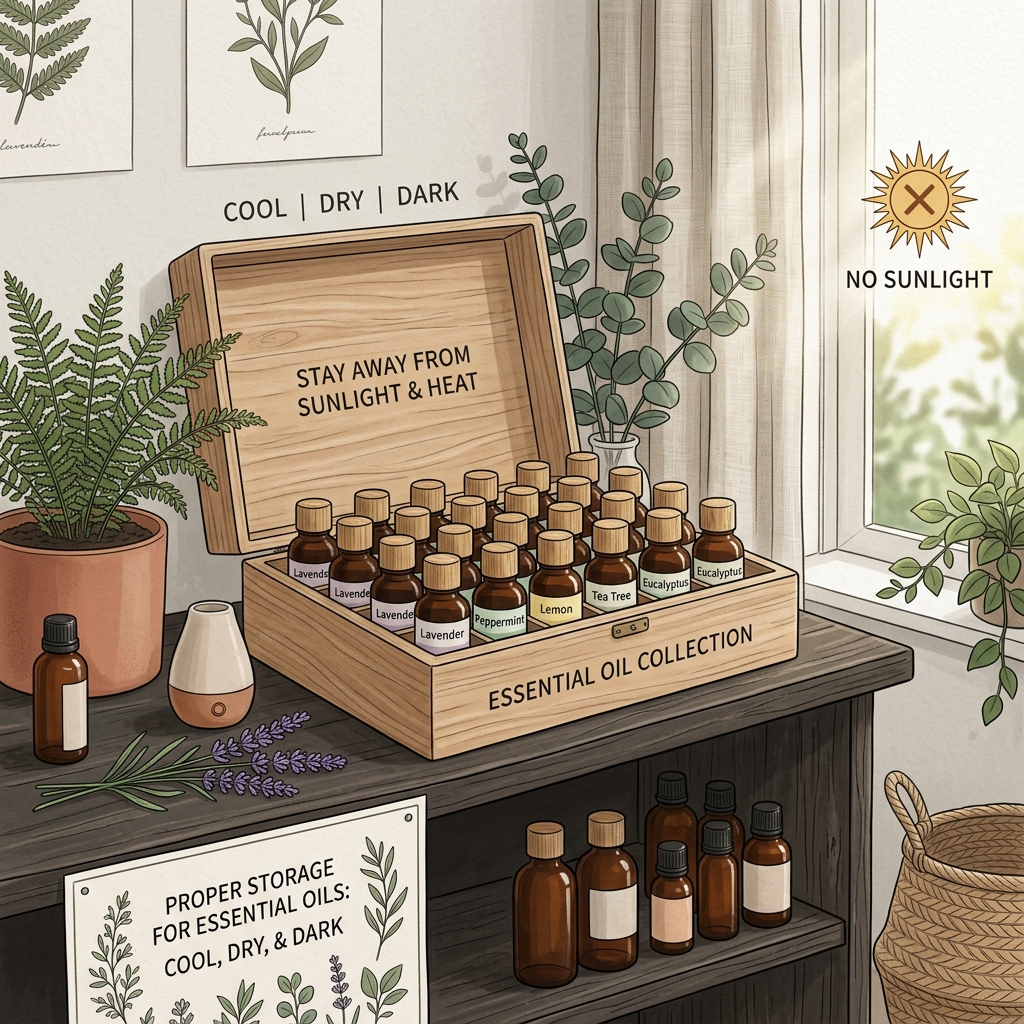
Essential oils are volatile, meaning they evaporate quickly and can be degraded by heat and light. * **Dark Glass Bottles**: Always keep oils in amber or cobalt blue glass bottles. Plastic can be broken down by the oils over time. * **Cool and Dark**: Store your collection in a cupboard or box away from windows and heaters. * **Tight Lids**: Ensure caps are screwed on tightly to prevent oxidation, which can make the oils more irritating to the skin. * **Keep Out of Reach**: Essential oils should be treated with the same caution as household cleaners or medications—keep them away from children and pets.
Essential Oil Storage Guide
5

Safe Diffusion Practices

Diffusing is a wonderful way to freshen your home, but "more" is not always "better." * **Ventilation**: Always diffuse in a well-ventilated room. * **Time Limits**: You don't need to run a diffuser all day. 30 to 60 minutes is plenty of time to fill a room with scent. * **Pet Safety**: Pets have a much stronger sense of smell and different metabolic systems than humans. Always ensure your pet can leave the room if they find a scent overwhelming.
6

What to Do if Irritation Occurs

If you accidentally apply too much oil or experience a "hot" sensation (common with oils like Peppermint, Oregano, or Cinnamon), do not use water to rinse. Because oil and water don’t mix, water can actually drive the essential oil deeper into the skin. Instead, apply more carrier oil (or even plain vegetable oil from your kitchen) to the area to further dilute the essential oil, then wipe it away gently with a soft cloth.

Safety Notes

While some high-quality essential oils are labeled for use as food additives, this should be done with extreme caution. Never ingest essential oils unless you are following specific, food-grade labeling instructions or are under the guidance of a professional. For most beginners, aromatic (diffusing) and topical (skin) use are the safest and most effective ways to start.

ProductsBook Session